
Immersive Roulette Gameplay: Realistic Casino Atmosphere, Interactive Betting Strategies, and a Roulette Game Probability Guide for Live Dealer Experience
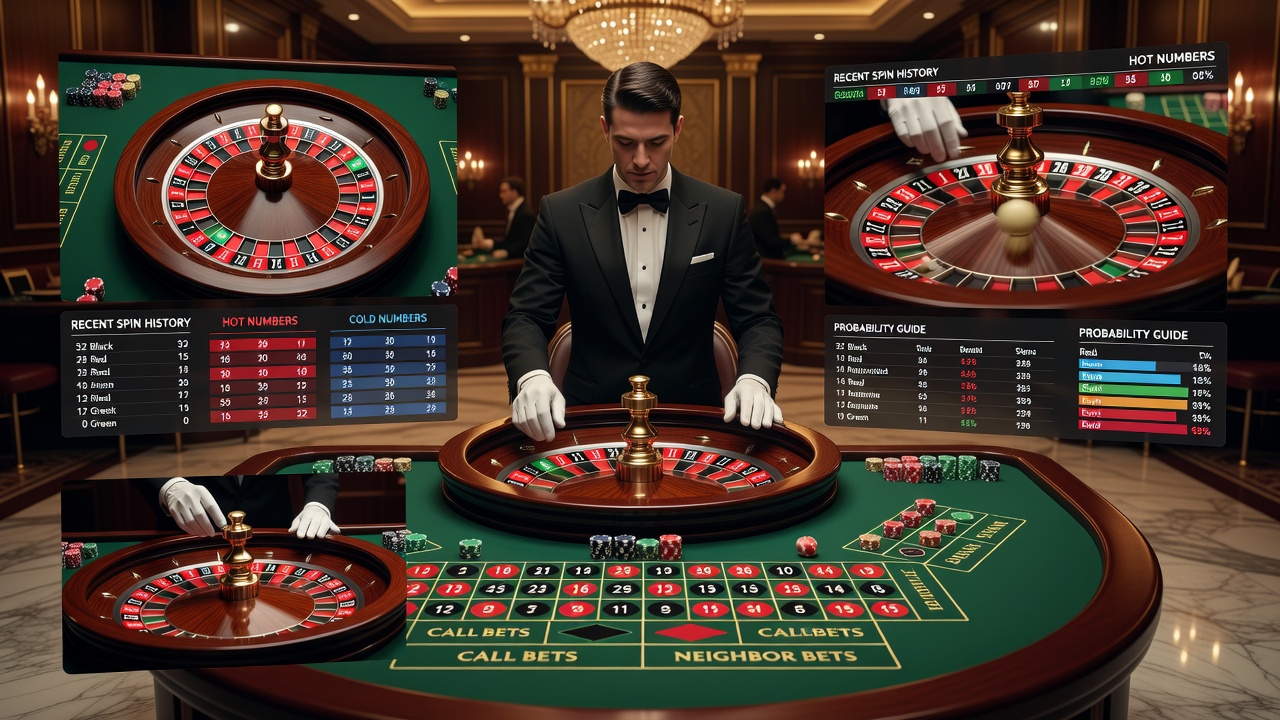
A roulette wheel has 37 or 38 pockets depending on which variant you sit down to play, and that single structural difference changes the house edge by more than double. Most players never check which wheel they're spinning against before placing a chip. That gap between what people assume and what actually governs the outcome is where this piece lives - in the space between the theatrical polish of a modern online table and the cold mathematics underneath it.
Live dealer roulette has quietly become the closest thing to sitting at a real casino table without leaving your chair. Dealers spin actual wheels, cameras stream from multiple angles, and chat features let you needle the croupier about a losing streak. Some platforms even publish a breakdown of house rules and table conventions - for instance, betfm.com's page on immersive roulette rules walks through how call bets and neighbor bets function on a live table, details that matter once real money is on the layout. None of that changes the odds, but it changes how the odds feel, and that distinction shapes everything that follows.
What follows is a practical look at how the atmosphere is built, how bets actually behave mathematically, and how to combine both without fooling yourself into thinking ambiance improves your edge.
The Rise of Immersive Roulette Gameplay in Online Casinos
From Random Number Generators to Human Dealers
Early online roulette ran entirely on random number generators. A server produced a result, a graphic spun, and the round ended in under a second. It was fast and functionally fair, but it stripped away everything that makes a physical casino compelling - the pause before the ball drops, the murmur of other players, the dealer's rhythm. Immersive roulette gameplay reintroduces that human element by filming a real wheel spun by a real person, streamed to thousands of players simultaneously. The randomness is now physical, not algorithmic, though the statistical outcome remains just as unpredictable.
Camera Work and Real-Time Production
What separates a convincing live table from an amateurish one is production quality. Multiple camera angles - overhead shots of the wheel, close-ups on the ball's final bounce, wide shots of the dealer's hands - are cut together in real time, similar to a sports broadcast. This constant visual variety keeps attention on the mechanics of the spin rather than a static feed, and it reinforces the sense that the outcome is genuinely live rather than pre-rendered.
Why This Format Appeals to Modern Players
Players who grew up with high-definition streaming expect production values to match. A grainy, single-angle feed feels dated next to a multi-camera broadcast with instant replays of winning numbers. This expectation has pushed operators to treat their roulette studios less like server rooms and more like actual television sets, complete with lighting design and dedicated dealer training.
- Multiple synchronized camera feeds for different viewing preferences
- Slow-motion replays of the ball settling into a pocket
- On-screen statistics tracking recent spins and hot or cold numbers
Recreating a Realistic Casino Atmosphere from Home
Studio Design and Physical Cues
Operators invest heavily in studio sets that mimic the visual language of a land-based casino floor - green felt, brass fittings, ambient lighting tuned to feel warm rather than clinical. A realistic casino atmosphere depends on these small details because they signal legitimacy. A cheaply lit set with a plastic wheel undermines trust even if the game itself is fair.
Dealer Presence and Table Etiquette
Professional dealers are trained the same way land-based croupiers are: consistent pacing, clear announcements of "no more bets," and calm handling of both wins and losses. Their presence does something a random number generator cannot - it introduces a social register to the game. Players greet dealers by name, dealers acknowledge regulars, and that familiarity builds the same low-level rapport you'd find at a physical table.
Sound Design as an Underrated Factor
The clatter of the ball, the click of chips being stacked, ambient chatter from the studio floor - these audio layers do more to convince a player they're in a real casino than visuals alone. Strip the sound out and even a perfectly filmed table feels hollow.
Interactive Betting Strategies for Live Dealer Tables
Chat-Based Engagement and Its Limits
Most live platforms include a chat window where players talk to the dealer and each other. This has given rise to a category of interactive betting strategies built as much around social behavior as around numbers - players coordinating on which sections of the table to cover, or reacting collectively to a long streak on red. It's worth being clear-eyed here: chat engagement doesn't alter probability. It changes the experience of betting, not the outcome of the bet.
Common Betting Systems Adapted for Live Play
Classic systems like Martingale, Fibonacci, and D'Alembert get frequently repurposed for live tables because the slower pace of a human-dealt spin gives players time to recalculate between rounds. Martingale doubles the bet after every loss, chasing a single win to recover previous losses. Fibonacci increases bets according to the sequence after a loss and steps back after a win. D'Alembert raises and lowers bet size by a single unit rather than doubling. All three manage bankroll psychology; none of them change the underlying odds of the wheel.
Table Limits and Bankroll Management
Live tables often carry higher minimum bets than RNG-based games because of dealer and studio overhead. This makes bankroll discipline more urgent. A sound approach sets a fixed session limit before sitting down and treats that number as non-negotiable regardless of how the chat room is reacting to a hot streak.
- Decide a loss limit and a win target before the session starts
- Avoid increasing bet size purely because of chat momentum
- Track which betting system is in use and stick to its rules consistently
Roulette Game Probability Guide: Understanding the Numbers
European vs. American Wheels
This is the single most important distinction in roulette mathematics. A European wheel has 37 pockets, including one zero, giving the house an edge of roughly 2.7%. An American wheel adds a double zero, bringing the total to 38 pockets and pushing the house edge to about 5.26%. Choosing the European wheel whenever it's available is the simplest mathematical decision a player can make.
Inside Bets vs. Outside Bets
A straight-up bet on a single number pays 35 to 1 but wins only once every 37 spins on average. An even-money bet like red/black or odd/even pays 1 to 1 and wins nearly half the time. Neither bet type has a better expected value than the other over the long run - the house edge is baked into every bet on the table equally - but the variance differs enormously, and understanding that variance matters more than chasing a "better" bet.
The Gambler's Fallacy and Streak Thinking
Perhaps the most persistent misunderstanding in roulette is the belief that a wheel "remembers" previous spins. If red hits eight times in a row, the probability of black on the ninth spin is still just under 50%, unaffected by history. A proper roulette game probability guide has to address this directly, because streak-based betting decisions are the most common way players misjudge their actual odds.
Choosing the Right Live Dealer Roulette Experience
Evaluating Stream Quality and Latency
A delayed or choppy stream undermines the entire premise of live play. Before committing real money, check the platform during a free preview period to confirm the video feed keeps pace with the actual spin and that betting windows close accurately relative to what's shown on screen.
Comparing Table Variants and Betting Options
Not every live dealer roulette experience is identical. Some tables offer additional side bets, statistical trackers, or multiple simultaneous camera views, while others stick to a bare-bones single feed. Reviewing table rules in advance - including how call bets and neighbor bets are handled - saves confusion once a session is underway.
Licensing and Fair Play Verification
A legitimate operator publishes licensing information and subjects its live studios to independent auditing. This matters more with live dealer games than RNG games, since players are trusting a physical process rather than a verifiable algorithm.
Frequently Asked Questions
Is live dealer roulette fairer than automated roulette?
Both are equally fair when run by licensed operators, since RNG games are independently tested and live games use physically verified wheels. The difference lies in transparency style - one is mathematically audited, the other is visually observable in real time.
Can betting systems like Martingale actually beat the house edge?
No betting system changes the built-in house edge of the wheel. These systems manage how quickly you win or lose your bankroll, not the statistical probability of any given spin.
Why do European wheels give better odds than American wheels?
The American wheel has an extra pocket, the double zero, which raises the house edge without increasing payouts. Fewer pockets on the European wheel mean a higher probability of any single bet landing correctly.
Does chatting with the dealer or other players affect the outcome of a spin?
No. Chat interaction is purely social and has no influence on where the ball lands. It shapes the experience and can affect a player's decision-making, but not the physical result.
What should I check before playing at a new live roulette table?
Confirm the platform's licensing, test stream quality during a free session if available, and review the specific table rules for call bets, minimums, and available side bets before wagering real funds.
Are inside bets riskier than outside bets in live roulette?
Inside bets carry higher variance because they win less often but pay significantly more, while outside bets win more frequently for smaller payouts. Both carry the identical house edge, so the choice comes down to risk tolerance rather than long-term value.